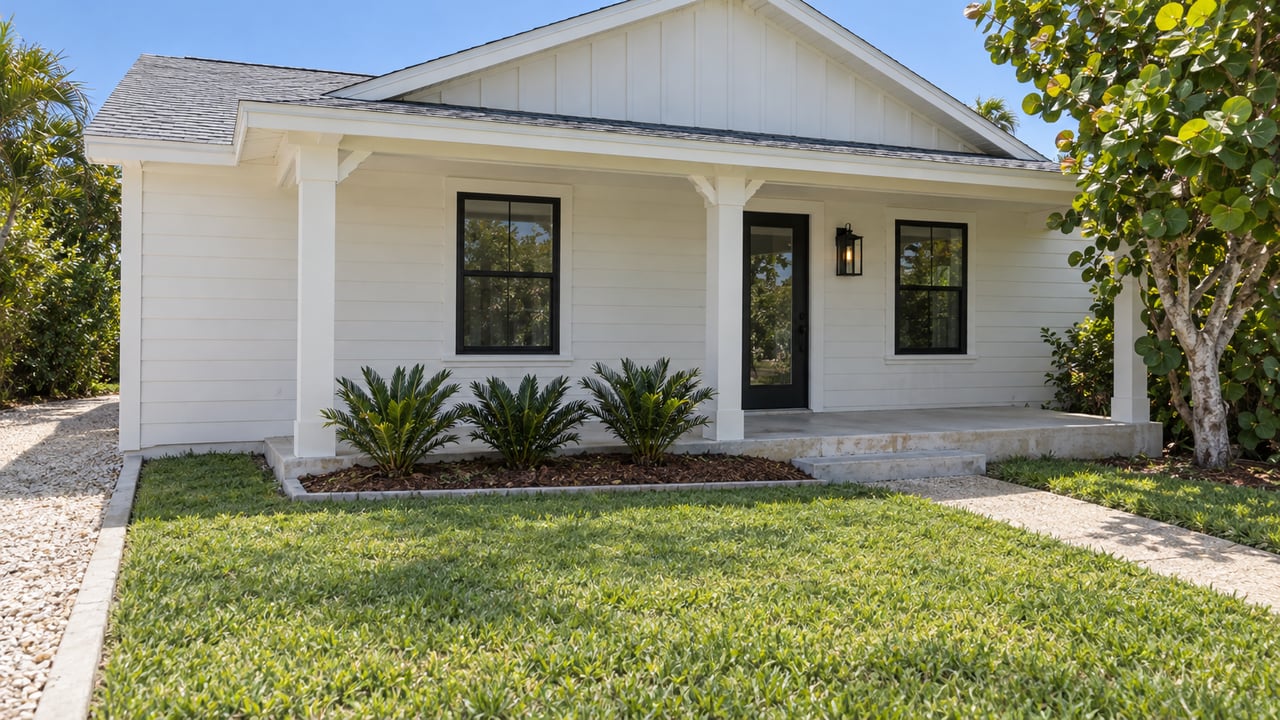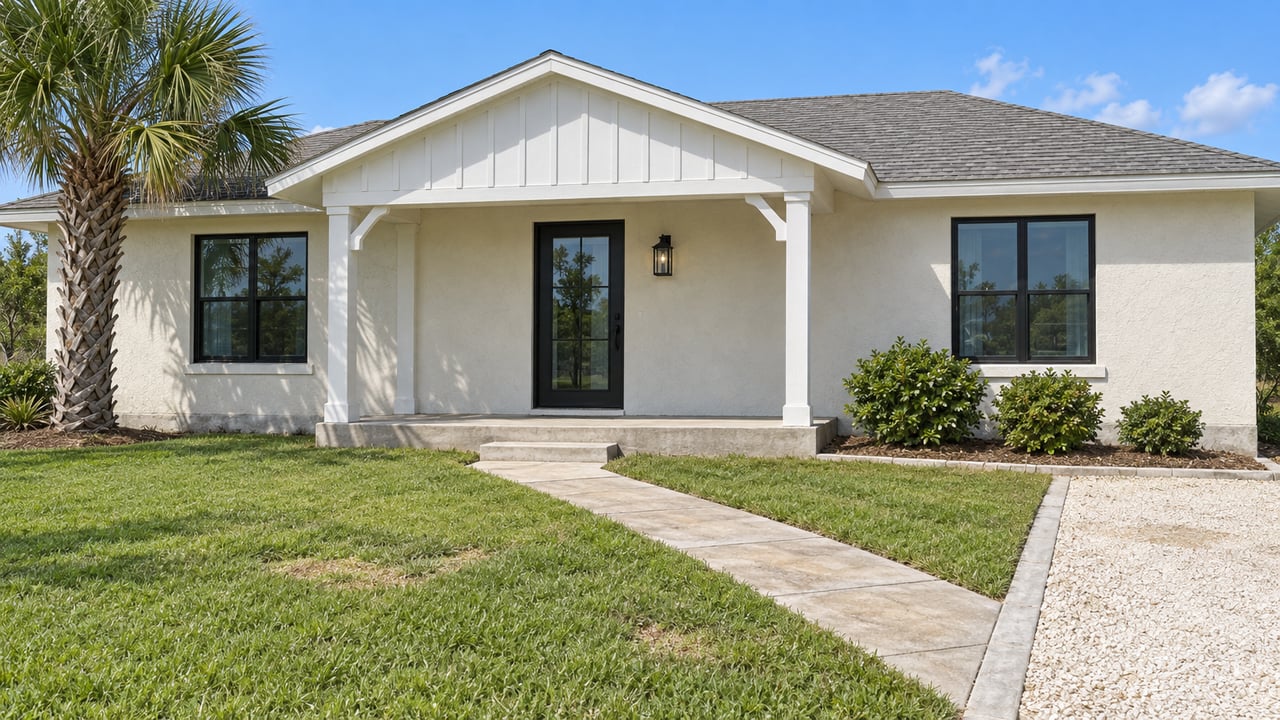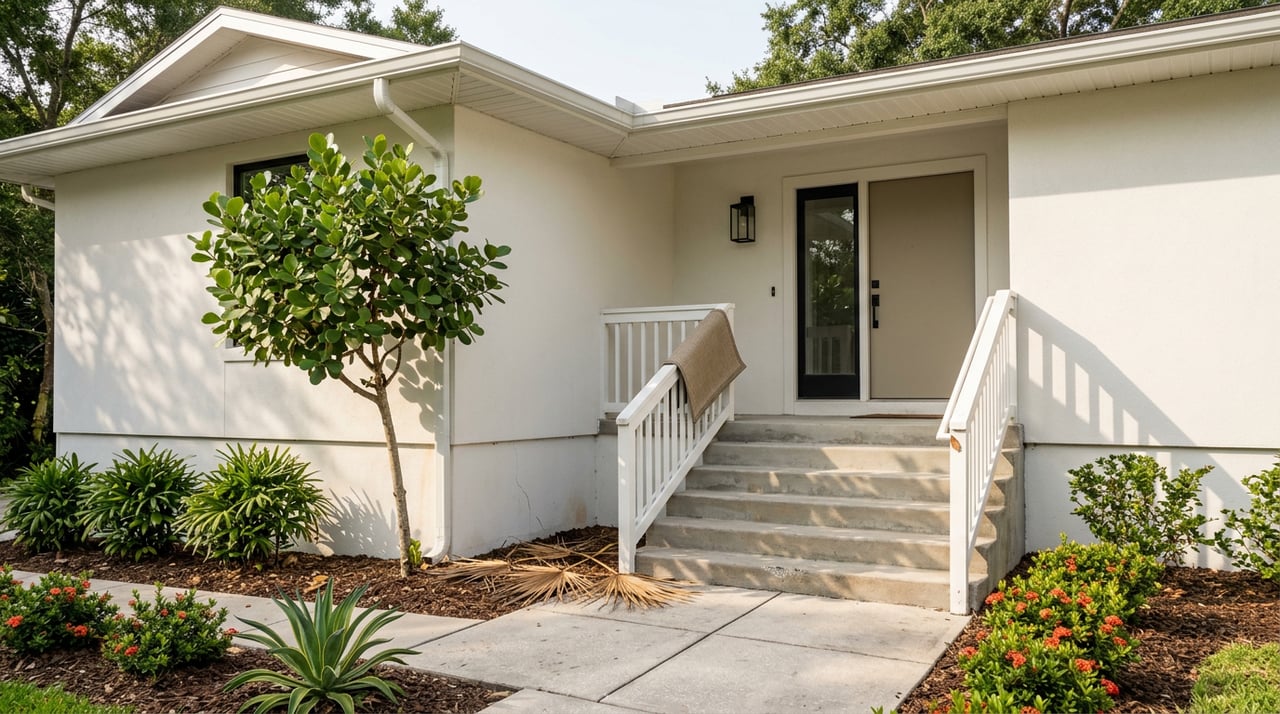
If a condo and a house on Siesta Key cost the same per square foot, are they actually the same deal? For the first quarter of 2026, the headline number says yes. Condo pricing on the island landed at $690 per square foot, single-family homes at $698. That's close enough to call it a tie, and it's the tightest that gap has been in five years of tracking the two property types against each other on this island.
Anyone shopping the Key right now has probably already noticed this and drawn the obvious conclusion: condos and houses are becoming interchangeable purchases, so buy whichever one fits the budget. That conclusion is wrong, and the reason it's wrong is the actual story here. The convergence isn't happening because condos got safer. It's happening because the condo market split into two markets that get averaged together into one deceptively tidy number.
The number that closed a five-year gap
Go back five years and condos on Siesta Key traded at a real discount to single-family homes on a per-square-foot basis. That discount has been narrowing steadily, and in the first quarter of 2026 it disappeared entirely at the island-wide average. Meanwhile the single-family side of the market kept doing what it's done since 2022: hovering close to that $698 figure, with the $4M-plus luxury tier commanding $1,513 per square foot on its own. Single-family inventory sat at 148 active listings as of March 31, 2026, condos at 241, and both segments were moving at close to 100 days on market on average.
That's the picture if you stop at the averages. The problem is that "average condo" on Siesta Key in 2026 isn't a coherent category anymore.
A building that finished its structural reserve study and funded it is not competing in the same market as a building that hasn't. The $690 per square foot average is stitching two different products into one number.
Same price tag, different building
The reason condos split into two tiers traces back to a specific regulatory deadline. Following the Surfside collapse, Florida tightened requirements for condo buildings, including Structural Integrity Reserve Studies and milestone inspections.
The bigger shift landed more recently. Under the reserve-funding rules tightened by HB 913, full reserve funding became mandatory for condo associations as of January 1, 2026. That single date is doing more to shape Siesta Key condo pricing this year than anything happening on the demand side.
Buildings that already had healthy reserves, or that moved early to complete their studies and fund accordingly, are pricing close to list and closing at rates near single-family per-square-foot levels. Buildings still catching up are disclosing the gap between what they've saved and what they owe, and that disclosure is showing up as a discount. Older mid-rise buildings along Midnight Pass Road, for instance, have been posting price declines in the 10 to 20 percent range year over year with extended time on market. That's not a coincidence of location. It's a compliance timeline working itself out in real estate listings.
Here's what separates the two tiers in practice:
| Building with funded reserves | Building still catching up on funding | |
|---|---|---|
| HOA dues | In line with the broader Sarasota County condo range, roughly $400 to just over $1,200 per month | Some Siesta Key beachfront buildings now charging $1,200 to $1,800 per month as reserve contributions catch up |
| Special assessment exposure | Routine capital work on newer, post-2000 buildings, often $1,000 to $3,000 | Can spike to $25,000 to $60,000 or more per unit for major repairs |
| Price behavior | Pricing near list, closer to single-family per-square-foot levels | Carrying visible discounts and longer days on market |
| What a buyer is actually paying for | Deferred maintenance already addressed | Deferred maintenance still ahead, priced into the discount |
The condo that looks identical to a house at $690 a foot might belong to either column. The listing sheet won't tell you which one. The estoppel certificate, the reserve study, and the board's meeting minutes will.
The convergence average hides two Siesta Keys
Geography tracks the compliance divide almost exactly. Areas with a concentration of older buildings still working through funding requirements are the ones dragging the condo average down and, paradoxically, making the island-wide number look more competitive with single-family pricing than it should. Areas with newer construction or buildings that got ahead of the reserve mandate are holding value and, in some cases, outperforming.
Based on where the discounts and the resilience are showing up:
- Older mid-rise buildings along Midnight Pass Road: the steepest year-over-year declines on the island, in the 10 to 20 percent range
- Higel Avenue, the North Siesta canals, and Point Crisp: milder adjustments, generally in the 2 to 5 percent range
- Crescent Beach: newer construction here has held its value better than the island average
None of this means one part of Siesta Key is a better place to live than another. It means the building's compliance status, not its street address alone, is the variable actually setting the price. Location and building history tend to travel together here, which is why the corridor pattern holds up, but the building is still the unit of analysis.
What the single-family side is actually doing
Single-family pricing on Siesta Key has been remarkably steady since 2022, holding close to the $2 million mark with one outlier quarter in early 2024 when a concentration of $4 million-plus sales pulled the average up to roughly $3.07 million. Sellers in this segment are accepting close to 91 percent of list price on average as of Q1 2026, which reflects normal negotiation room rather than distress. Cash buyers make up about 42 percent of single-family transactions in Sarasota County, a share that keeps this side of the market less sensitive to mortgage rate swings than buyers might expect.
The single-family side isn't the one being distorted by an averaging problem. It's the condo side, and that's exactly why the two markets are converging on paper without actually converging in risk.
Before you compare two price tags
If you're weighing a condo against a house on Siesta Key because the per-square-foot math looks similar, the building's paperwork matters more than the listing photos. Before writing an offer on any condo:
- Request the current estoppel certificate and confirm there are no pending or recently levied special assessments.
- Ask for the association's most recent Structural Integrity Reserve Study and its completion date.
- Confirm whether the building has met its milestone inspection requirement, and if not, when it's due.
- Review at least the last 24 months of board meeting minutes for any discussion of upcoming capital work or funding shortfalls.
- Compare the monthly HOA figure against the building's stated reserve funding status rather than against the island average alone.
A single-family purchase carries its own version of this list, focused on roof age, wind mitigation credits, and elevation.
FAQ
Does a completed milestone inspection mean a condo building is done with assessments? No. A milestone inspection identifies structural issues at that point in time. A building can pass inspection and still face a special assessment later if the reserve study identifies underfunded future capital needs; reserve funding is a separate requirement.
Is the per-square-foot convergence happening across every price bracket? The Q1 2026 data reflects island-wide averages. The luxury single-family tier, at $4 million and above, is pricing at a clear premium per square foot compared to the broader average, so the convergence is most visible in the middle of the market rather than at the top.
Buying on Siesta Key right now means reading two different documents for two different reasons: the appraisal for the house, and the association's financials for the condo. If you want a second set of eyes on either one before you write an offer, Renne' Rupp can walk through the specific building's numbers with you and help you request a free home valuation on what you already own or what you're about to buy.
This article is general information, not legal, tax or financial advice. Consult a qualified professional about your situation.