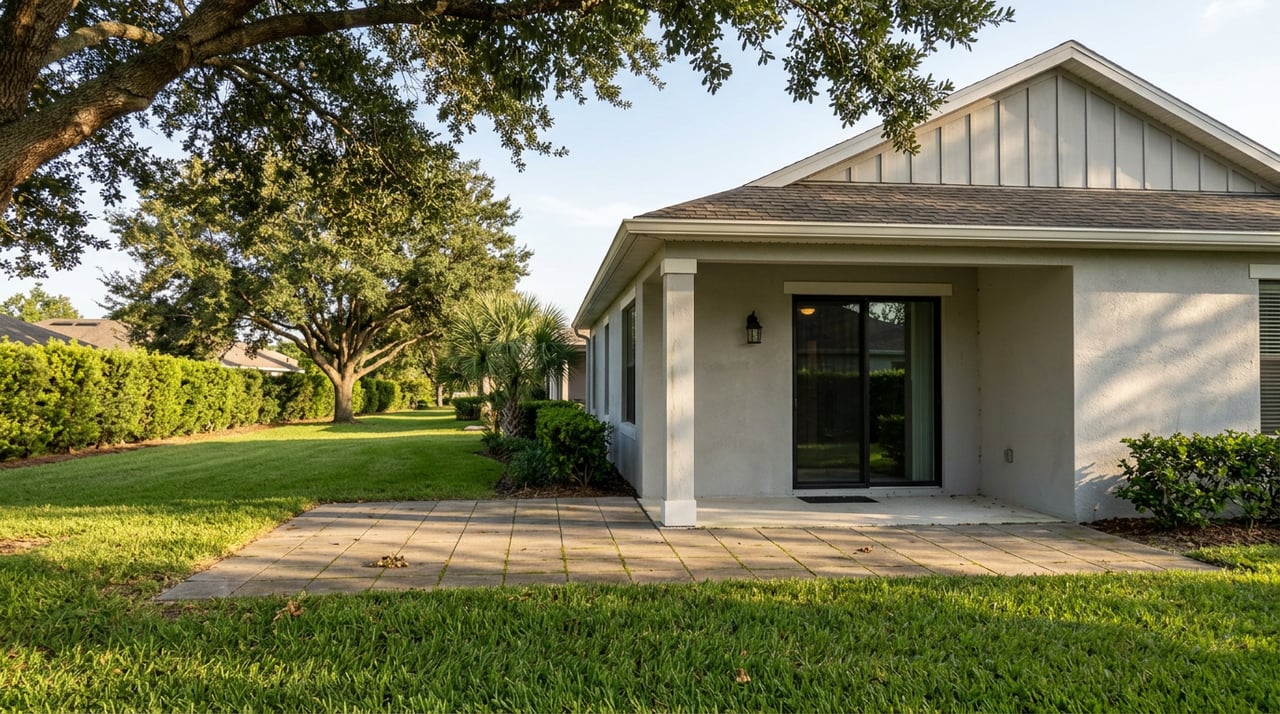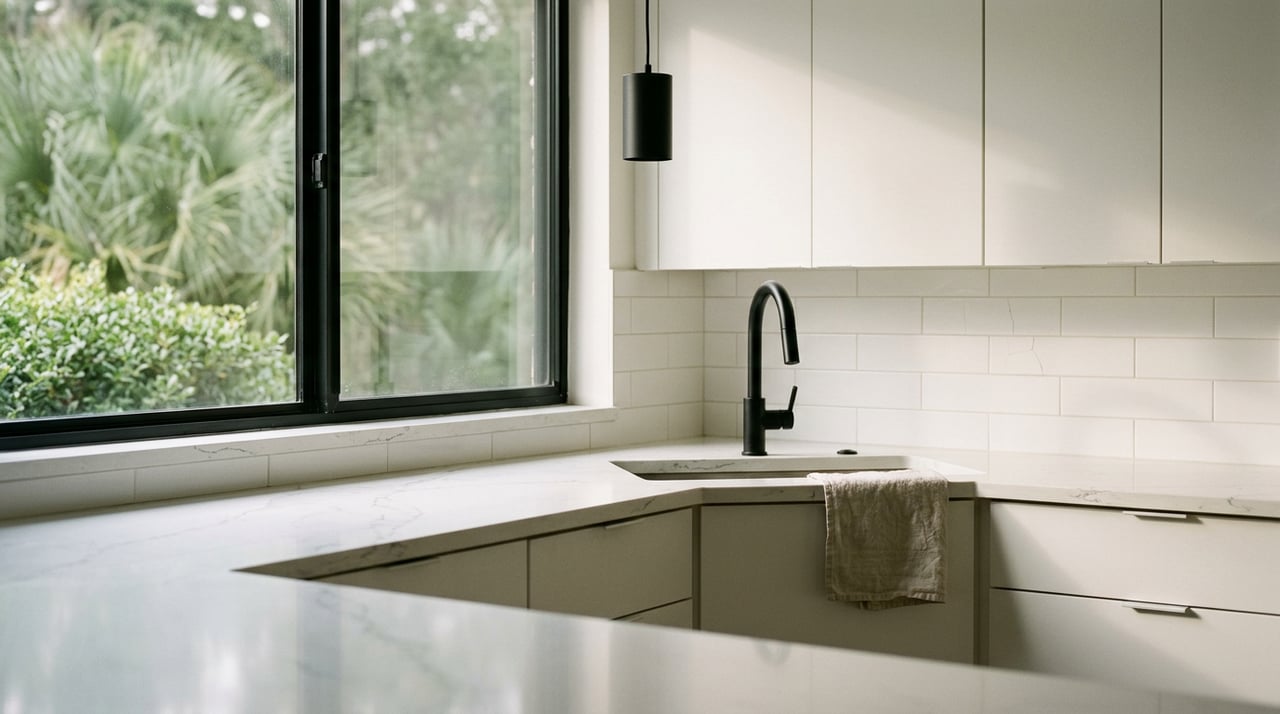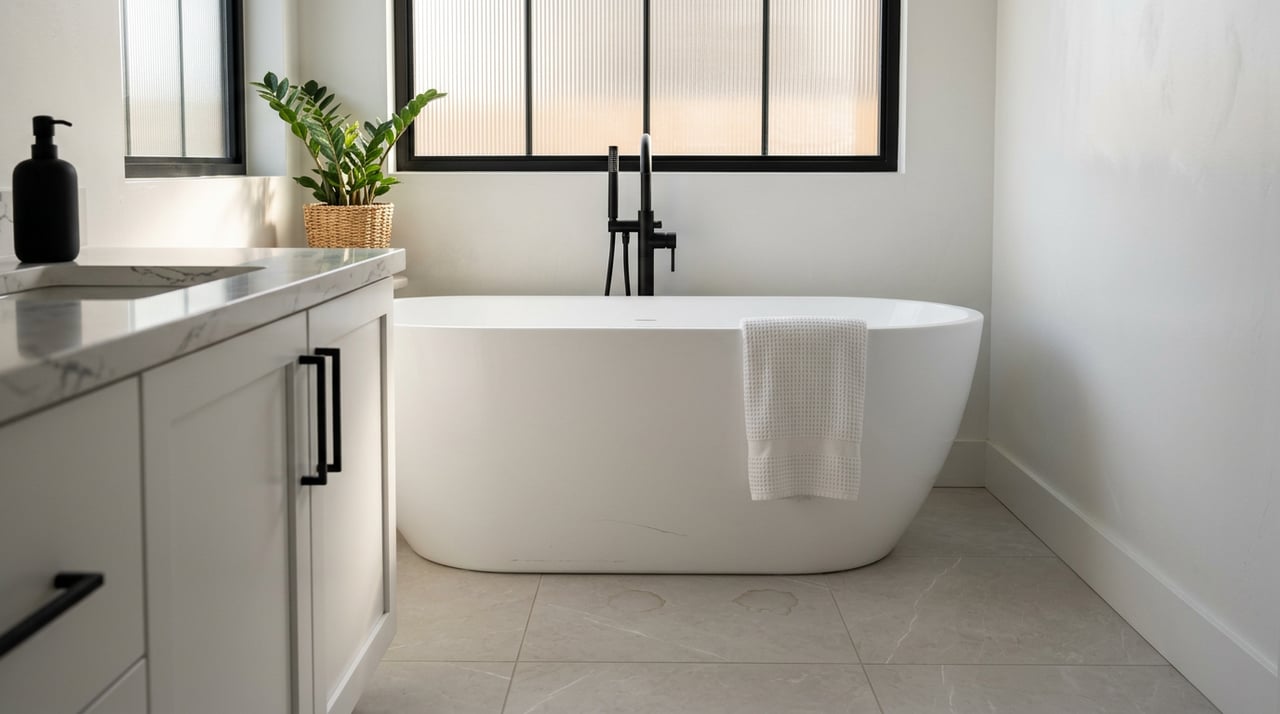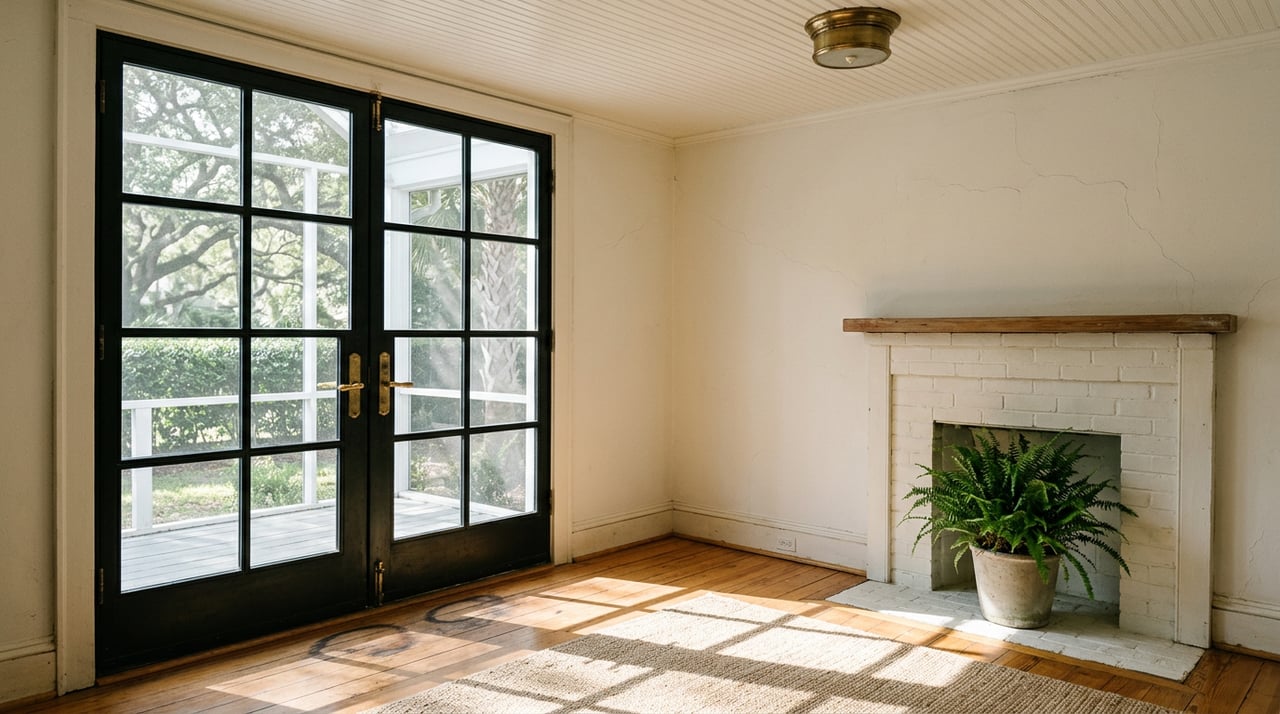
In January 2026, a four-bedroom cottage on Hawkins Court in Sarasota's Laurel Park sold for $560,000. It is an original structure, the kind of workman's bungalow the neighborhood was built on in the 1920s. The next month, a stone's throw away on South Osprey Avenue, a newly built three-bedroom modern residence closed for $1.38 million. On that same street, within the same window of sales, a luxury estate traded for $2.28 million.
Pull up any portal's median price for Laurel Park and you get one number. That number is trying to describe both of those sales at once, and it fails at the job. It is not that one property is overpriced and the other underpriced. It is that Laurel Park is not one market wearing one zip code. It is two markets that happen to share a name, a park, and a set of brick-paved streets, and they do not compete with each other for the same buyer.
The comps that don't belong in the same sentence
Look at what actually changed hands in the roughly six months leading into spring 2026:
| Address | Price | Sold | Type |
|---|---|---|---|
| 1825 Hawkins Ct | $560,000 | January 2026 | Historic 4-bedroom cottage |
| 521 & 523 Ohio Pl | $749,990 | February 2026 | Multi-unit historic property |
| 1919 Laurel St | $1.07 million | December 2025 | Refined 2-bedroom home |
| 310 S Osprey Ave | $1.38 million | February 2026 | Modern new construction |
| 515 S Osprey Ave | $2.28 million | Same 6-month window | Luxury new-build estate |
That is roughly a four-times spread on lots that, in some cases, sit within walking distance of each other. A buyer who only knows the median has no idea which end of that table they are actually shopping in until they get a listing in front of them.
Why the two sides don't compete
The gap exists because nothing in Laurel Park forces the two markets to converge. There is no master homeowners association setting a floor on finishes. There is no Community Development District bond schedule spreading infrastructure costs evenly across every lot, the way there is a few miles east in Lakewood Ranch or Wellen Park. Every parcel here is priced on its own terms, by whoever happens to be selling it and whoever happens to want it.
The zoning underneath the whole neighborhood is RSM-9, Residential Single Multiple at nine units per acre, according to the Laurel Park Neighborhood Association. That classification does not mandate redevelopment, but it permits it. Any lot in the district is legally eligible to become something denser or newer than what sits on it today. That single fact is what keeps land value alive under even the most run-down cottage, and it is what gives a builder a reason to keep buying up the last vacant and teardown parcels.
Legacy Builders on the Westcoast is doing exactly that with a project called Homes of Laurel Park, converting 19 lots into new-construction houses across four floor plans, The Cypress, The Laurel, The Hudson, and The Sand Drift, sold in two finish tiers the builder calls Sapphire and Ruby. That is not a hypothetical about what the neighborhood could become. It is a live pipeline consuming the supply of buildable dirt right now.
The historic label that doesn't do what people assume
Here is where a lot of buyer confusion starts. Laurel Park carries National Historic District status, and several agents describe that as a constraint on what an owner can do to a "contributing" structure. That is not quite what the neighborhood's own governing overlay says.
The Laurel Park Overlay District, negotiated over roughly three years and shepherded by longtime civic activist Kate Lowman, exists for one specific purpose according to the neighborhood association: it provides for community input into new commercial construction within the district. It does not establish a design review board for private single-family renovations or demolitions. A homeowner deciding whether to gut a 1930s bungalow or tear it down and start over is not walking into the same community workshop process a commercial developer would face.
That distinction matters because it is the reason the teardown side of the market moves as fast as it does. If every remodel or rebuild of a private home required the kind of neighborhood review a commercial project gets, the supply of new construction wouldn't be keeping pace with demand the way it currently is.
What restoration actually costs, in one house
The other side of the split has a face too. In its June 2026 issue, Sarasota Magazine told the story of 300 S. Osprey Avenue, a small bungalow that was moved under the cover of darkness in November 1996, driven from Prospect Street along U.S. 41 and Ringling Boulevard, sold for one dollar to spare it from demolition, and set down on an empty Laurel Park lot. Michelle and Paul van Deventer bought the house in 2020 and spent years bringing it back with interior designer Jessica Bush of Formed Home and general contractor Brandon Graber. They kept the original plaster walls, hanging art from a picture rail system because nails could not pierce the century-old surface. Bush put it simply: "You could see the potential, but everything had to be touched."
The 2024 hurricane season pushed the project back further. The couple added rafter straps for storm resistance, which meant revised permitting before the work could continue.
That is the actual cost of choosing the restoration side of Laurel Park's split market. It is not just a purchase price. It is years, a contractor you trust completely, and a willingness to absorb delays that have nothing to do with your own decisions.
The flood math that tips people toward new construction
Part of Laurel Park sits within a flood zone, close enough to Hudson Bayou and the Oak Street Canal that some homes in the district, like a listing on Oak Street, are built as elevated concrete-block structures. That detail matters more than it looks like it should.
Sarasota County's own property appraiser explains the federal rule at the center of this: if the cost of repairs or improvements to a structure equals or exceeds half of the building's market value, the entire structure has to be brought up to current flood-zone construction standards, including elevation. The City of Sarasota's flood maps were also updated as of March 27, 2024, replacing maps that had been in place since 2016, which shifted base flood elevations and floodplain boundaries in parts of the county.
Put those two facts together and you get a real incentive, not a preference. A cottage that needs new electrical, new plumbing, and structural work can run past that halfway threshold fast, at which point the county requires the whole house to meet today's elevation standard anyway. For a lot of owners, that is the moment a planned renovation quietly becomes a full rebuild, because the code is going to ask for the same thing either way.
The question a buyer should actually be asking
The right question isn't whether you can afford Laurel Park. It's which Laurel Park you're being shown.
If you're looking at an original cottage, ask about the sewer laterals and the electrical panel before you fall for the porch. Original clay laterals are common on pre-1950s lots and can turn into a five-figure surprise once an inspector gets a camera down the line. Ask whether the home sits inside the mapped flood zone, and if it does, ask what percentage of the structure's value a full system update would represent, because that number determines whether you're buying a renovation project or a future rebuild.
If you're looking at new construction on a former teardown lot, the math runs the other way. You're paying for finished systems, current elevation compliance, and a lower long-term insurance profile, and you're giving up the plaster walls and the moved-house history that come with the original stock.
Neither answer is wrong. They're just different products being sold under the same neighborhood name.
FAQ
Does Laurel Park have HOA or CDD fees? No master homeowners association or Community Development District governs the neighborhood as a whole. Individual properties are priced and improved on their own terms rather than under a shared fee structure.
Can I renovate an old house in Laurel Park without special approval? The Laurel Park Overlay District's stated purpose is community input on new commercial construction, not a design review process for private single-family renovation or demolition. Standard city building and floodplain permits still apply.
Why are some Laurel Park homes elevated and others aren't? Part of the neighborhood sits within a mapped flood zone near Hudson Bayou. Newer construction in that portion is typically built to current base flood elevation requirements, while older cottages built decades before those standards existed often are not, which is a real factor in insurance costs and renovation decisions.
If you're comparing a Laurel Park cottage against new construction a few blocks over, the number that matters isn't the neighborhood median. It's the specific lot, the specific systems, and the specific flood designation in front of you. That's the kind of comparison worth doing with someone who knows which questions to ask before you write an offer, not after. Reach out to Renne' Rupp for a walk through what a specific Laurel Park address, old or new, actually means for your budget.